Uncategorized
Innotox and Botox Compared: Efficacy, Safety, and Results

Apr
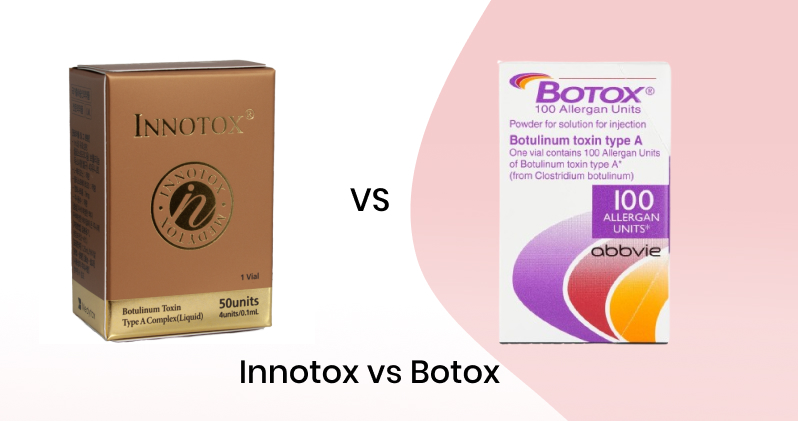
Innotox and Botox.Neuromodulator injections (botulinum toxin type A in particular) are among the most popular cosmetic products in the aesthetic field. Manufacturers regularly perfect and release new variations, so it’s possible to find the best formulation for customers with different needs. Today’s article is dedicated to innovation vs. tradition; new formulation vs. proven effectiveness. We are going to discuss Innotox and Botox cosmetic treatments and compare their primary characteristics to better understand the difference. Follow along to learn more about this exciting topic.
Botulinum Toxin Products and Their Popularity Nowadays
Botulinum toxin formulations are among the most popular treatments on the market nowadays. As a neuromodulator, it relaxes facial muscles to prevent their contraction and, as follows, dynamic facial wrinkles (also known as emotional lines).Innotox and Botox
It is believed that botulinum toxin injections are popular due to the current trendiness of natural beauty. People don’t wish to reshape their faces; instead, they prefer to work with natural features and subtly improve their appearance without dramatic changes. Both Innotox and Botox are ideal for such goals, as they typically prevent the issue, thereby providing high patient satisfaction after the clinic visit. Another popular product category, dermal fillers, is meant to address existing issues; they fill deep creases to even out the skin surface and provide a smooth, younger-looking appearance. Botox and dermal fillers are often used together for better results and longer-lasting effects. Innotox and Botox
Innotox and Botox: Key Differences
Botox and Innotox are used for a wide range of cosmetic and therapeutic indications. Specialists choose them as safe, efficient products that can help patients achieve their desired goals without risk or complications. And even though these two brands are both botulinum toxins, there are certain key differences that must be understood and highlighted for a more successful treatment plan development. Below, we will outline the main characteristics and compare them to better understand them.Innotox and Botox
#1. Formulation Differences
When comparing Innotox and Botox, we should focus on two main points: their composition and formulation.
Regarding composition, both brands contain botulinum toxin type A — a substance derived from Clostridium botulinum that may be toxic when used in large quantities. However, it is completely safe when used in small dosages. What is the main difference here? Innotox is free of human serum albumin and animal-derived ingredients; a synthetic stabilizer is used instead. This factor significantly reduces the risk of allergic reactions and complications. If patients need a purely synthetic option, Innotox is the perfect candidate. Botox, on the other hand, contains human serum albumin and sodium chloride, which is beneficial for its stability profile.
As for the formulation, Innotox has a liquid formulation and comes in the ready-to-use liquid form, which simplifies handling and administration. It reduces the chances of human error significantly, as all that’s required from specialists is to open the vial and start the treatment. Botox requires reconstitution with sterile saline because it comes as a freeze-dried powder, which may lead to concentration inconsistencies if not mixed properly.
“The pre-mixed, liquid formulation of Innotox eliminates the reconstitution step entirely. This not only streamlines the preparation process for busy clinicians but also significantly reduces the margin for human error and potential contamination during mixing.” — Dr. Charles Won, Lead Researcher in Aesthetic Dermatology
#2. Clinical Performance: Efficacy, Onset, Duration
Both botulinum toxin treatments are known for their effectiveness; however, the timeframes still vary, which is another factor patients often consider when choosing the best option. Some prioritize fast results, while others seek a longer-lasting solution.
Innotox’s liquid formulation guarantees a faster onset of action (2-3 days), while traditional Botox requires approximately 4-7 days to show results. Another benefit of Innotox’s innovative stabilized formulation is that it blocks nerve signals for longer — 4 to 6 months (in some patients, up to 8), while the average longevity of Botox results — typically 3-4 months. This explains why products like Innotox are so popular right now, inspiring specialists to buy Korean Botox online from reliable suppliers to deliver the best customer experience.
| Clinical Metric | Innotox | Botox |
|---|---|---|
| Onset of Action | 2 to 3 days | 4 to 7 days |
| Peak Efficacy | Approx. 10 to 14 days | Approx. 14 days |
| Average Longevity | 4 to 6 months (up to 8 in some cases) | 3 to 4 months |
| Re-treatment Interval | Less frequent | Standard frequency |
#3. Diffusion and Safety
The probability of achieving desired outcomes is also defined by other important factors, such as diffusion. Innotox’s liquid form ensures smoother diffusion, which is crucial for practical considerations during procedures targeting areas that require precision, such as forehead wrinkles. On the contrary, Botox’s diffusion radius is easier in navigation, making it more suitable for smaller areas for wrinkle reduction.
Another thing to consider before facial rejuvenation is immunogenicity. Innotox has a lower risk of antibody formation due to the absence of human serum albumin and complexing proteins; however, additional clinical trials are required to confirm this.
“While traditional freeze-dried botulinum toxins have a proven decades-long safety track record, the elimination of human serum albumin and complexing proteins in newer liquid formulations presents a compelling advancement in minimizing long-term immunogenicity and antibody resistance.” — Dr. Aenone Harper-Machin, Consultant Plastic Surgeon
The last crucial aspect to discuss is safety, as specialists always seek the most beneficial options for their clients. Botox is an FDA-approved product, and its safety is supported by years of clinical use and studies. Innotox, on the other hand, is not FDA-approved, but it is approved by the Korean Ministry of Food and Drug Safety (MFDS), which proves it’s perfectly safe to use. The Asian market is known for its unique and revolutionary products and formulations, so you can buy Innotox safely without concerns regarding safety or reliability.
#4. Storage Conditions
In aesthetic medicine, proper storage is crucial for the procedure’s general safety. The products must be handled correctly during every stage, from transportation to clinic storage. Still, Innotox has a huge benefit here: its room-temperature stability makes it much easier to handle. Innotox maintains its stability at room temperature, while Botox requires refrigeration to maintain its potency. It doesn’t require refrigeration, while traditional botulinum toxin must be stored in the freezer before reconstitution and kept cold afterward.
Short Overview Table
| Feature | Innotox | Botox |
|---|---|---|
| Manufacturer / Origin | Medytox (South Korea) | Allergan / AbbVie (USA) |
| Formulation | Liquid, ready-to-use (no reconstitution required) | Lyophilized powder, must be reconstituted with saline |
| Active Ingredient | Botulinum toxin type A | OnabotulinumtoxinA (Botulinum toxin type A) |
| Complexing Proteins | Free of complexing proteins (pure toxin) | Contains complexing proteins in formulation |
| Duration | Typically lasts 3–4 months | Typically lasts 3–4 months |
| Approval Status | Approved in South Korea and select markets; not FDA-approved | FDA-approved and used globally for multiple indications |
| Ease of Use | Ready-to-use liquid simplifies preparation | Requires reconstitution before injection |
Botox/Innotox Safety Information
Even though Botox and Innotox are safe for most patients and rarely cause severe side effects, safety information is still an important topic that should be covered before the treatment itself. Below, we’ll cover all the essentials for this topic.
Adverse Reactions
Both treatments share similar side effects, such as mild bruising, redness, or swelling in about 10-15% of cases. However, Innotox omits albumin and animal-derived proteins, which reduces the risk of allergic reactions and antibody development over time.
| Safety Consideration | Innotox | Botox |
|---|---|---|
| Common Side Effects | Mild bruising, redness, swelling | Mild bruising, redness, swelling |
| Allergic Reaction Risk | Lowered (no human serum albumin or animal proteins) | Low overall, but contains human serum albumin |
| Antibody Development | Reduced risk over time due to pure formulation | Possible with long-term, high-dose usage |
| Preparation Risks | None (ready-to-use liquid) | Potential concentration errors during reconstitution |
Most side effects from both treatments are transient and self-limiting, disappearing within a few days post-treatment. Professionals recommend instructing patients on proper aftercare to reduce healing time and ensure the area is properly pampered after the session. It is vital to inform a doctor if any severe side effects develop after treatment, such as signs of an allergic reaction or extreme pain at the injection site. Even though the risk of such complications is extremely low, being informed is still crucial for the overall safety of the procedure.
Limitations
To ensure botulinum toxin injections are right for an individual, specialists must conduct a pre-treatment consultation and discuss all crucial aspects with them in terms of their health situation: allergies, hypersensitivities, family history of illnesses, etc. Based on that, they decide whether these products are safe for individuals.
What contraindications shouldn’t be ignored?
- Known hypersensitivity related to the products’ components;
- Skin irritation, wounds, etc.;
- Autoimmune diseases;
- Pregnancy or breastfeeding (as it’s unknown how botulinum toxins can affect the baby/fetus or the mother).
If Innotox or Botox is not the right option for an individual, an alternative can be picked; check out the variety on FillerSupplies to select the most suitable option. Innotox and Botox
FAQ
What Is the Key Difference Between Innotox and Botox Cosmetic Procedures?
There are a few aspects that differentiate Innotox from Botox, but the main one is formulation. Innotox is a liquid botulinum toxin, unique in its nature. It’s much easier to transport and doesn’t need refrigeration. Innotox and Botox Botox, on the other hand, comes in the form of freeze-dried powder, which is much more sensitive to temperature and must be stored in the freezer before first use.
Is Innotox FDA-approved?
No, Innotox is not FDA-approved. However, it is approved by the Korean Ministry of Food and Drug Safety (MFDS), which proves its safety. That’s one of the main reasons specialists around the world use this product so often.
How Does Botox Differ from Innotox in Terms of Duration?
When it comes to timing, the numbers differ slightly for both Innotox and Botox. Innotox typically shows results within 2 to 3 days, while Botox takes 4 to 7 days to exhibit noticeable effects. It has been shown to maintain superior wrinkle improvement through week 16 compared to Botox. Overall, most patients experience longer-lasting results with Korean Botox (up to 6 months, in some cases even 8), rather than with the traditional one (3-4 months).
Which Formulation to Pick for Better Clinical Efficacy?
There is no correct answer to this question. The best product should be selected based on patients’ needs. If they require faster results from a synthetically manufactured product, Innotox will be the right call. Botox is better for individuals who need to treat smaller areas due to its diffusion radius.
References
- Allergan. (2023). BOTOX® Cosmetic (onabotulinumtoxinA): Prescribing information and safety data. Irvine, CA: Allergan, an AbbVie company. https://www.rxabbvie.com/pdf/botox-cosmetic_pi.pdf
- Won, C. H., et al. (2015). The Efficacy and Safety of Liquid-Type Botulinum Toxin Type A for the Management of Moderate to Severe Glabellar Frown Lines. Plastic and Reconstructive Surgery. https://pubmed.ncbi.nlm.nih.gov/25539308/
- Rho, N. K., & Han, K. H. (2024). A survey on the cosmetic use of injectable neuromodulators: The pattern of practice among Dermatologists. Journal of Cosmetic Dermatology. https://pubmed.ncbi.nlm.nih.gov/38217234/
- Medytox Inc. (2022). Innotox: Product Specifications and Clinical Data. Ochang-eup, South Korea: Medytox. https://www.medytox.com/page/innotox_en
